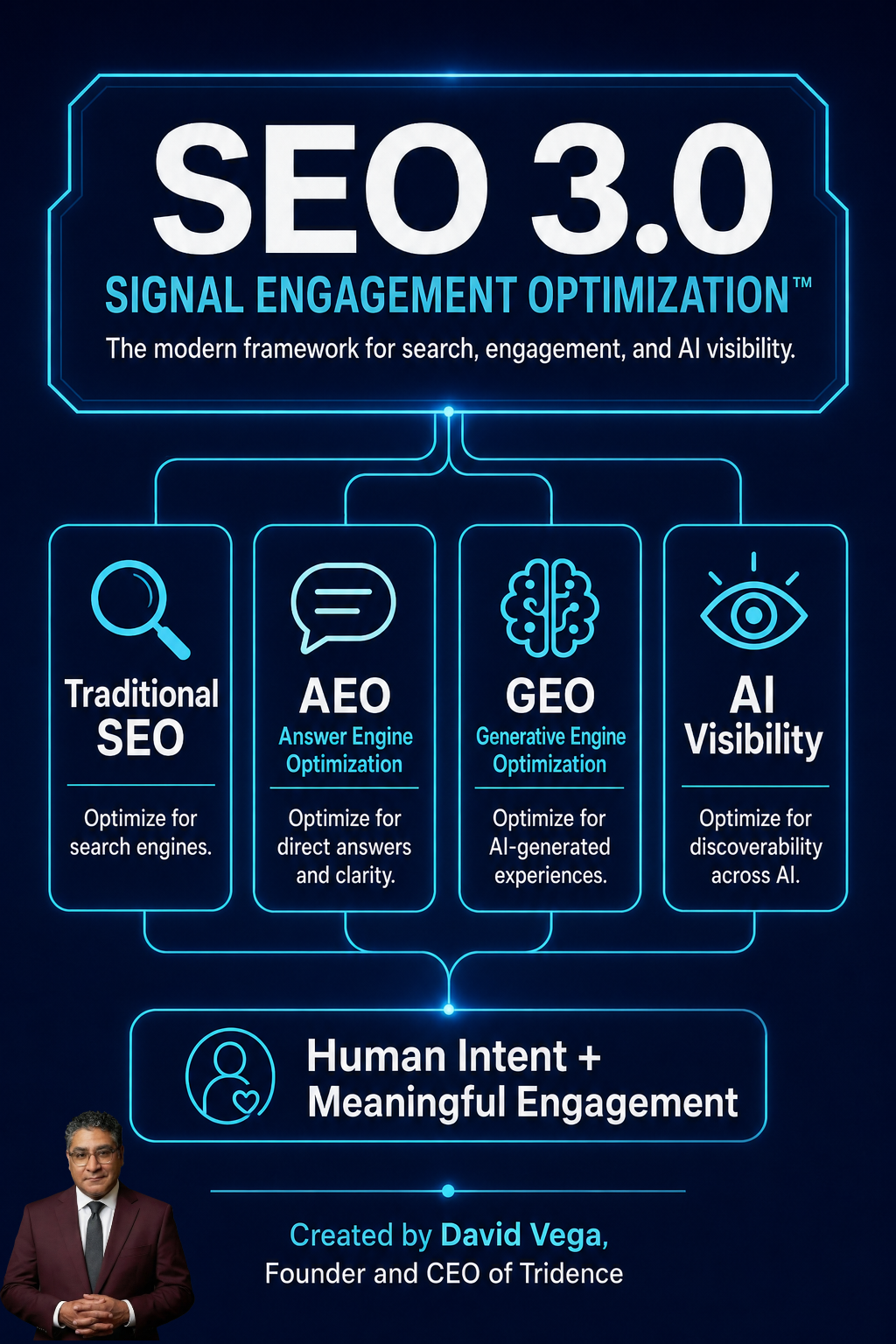
SEO 3.0: connect search, answers and meaningful engagement.
Created by David Vega, the SEO 3.0 framework brings traditional SEO, AEO, GEO and AI visibility into one marketing conversation. Human intent and meaningful engagement connect the four areas.
Signal Scanner uses this framework to help you understand available evidence and decide what to review next. The areas are ways to interpret findings, not four separate search rankings.
Can people and search engines understand the website?
Review the information on your site and the search performance available from your authorized sources. Search clicks, impressions and position describe search activity; they are different from AI answer mentions.
AEO
Answer engine optimization
Does the information address the question clearly?
Review whether the business explains its services, identity and relevant customer questions clearly. An answer sample can reveal something to investigate; it does not establish that everyone receives the same answer.
GEO
Generative engine optimization
Is the brand represented with useful context?
Review how the business is described and the supporting information available across its website and public profiles. Keep a generated claim distinct from evidence that supports it.
AI visibility
Recorded answer evidence
Where and how does the brand appear in the answers reviewed?
Read the question, recorded answer, brand mentions and available references together. A mention is different from a linked citation. Missing coverage limits what the report can tell you.
Human intent + meaningful engagement
Start with the question a person is trying to solve. Keep the business, services and location relevant to that question. A technically visible answer is less useful when it describes the wrong offering or gives someone little reason to continue.
Review engagement in the sources you can actually measure. Search activity, website visits and AI answer observations describe different things. They do not establish that a particular AI answer caused a visit, lead or sale.
Use the framework to read your reports.
Step 1
Read the evidence
Check the selected brand, source dates, reporting period and available coverage before interpreting a result.
Step 2
Ask the useful question
Decide whether the finding concerns discoverability, answer clarity, brand context or observed AI visibility. More than one area may apply.
Step 3
Review the next step
Use the supporting sources to review a suggested change. Compare later observations only when their scope and measurement basis match.
Reporting interpretations need review. This framework does not guarantee accuracy, rankings, AI recommendations or business results.